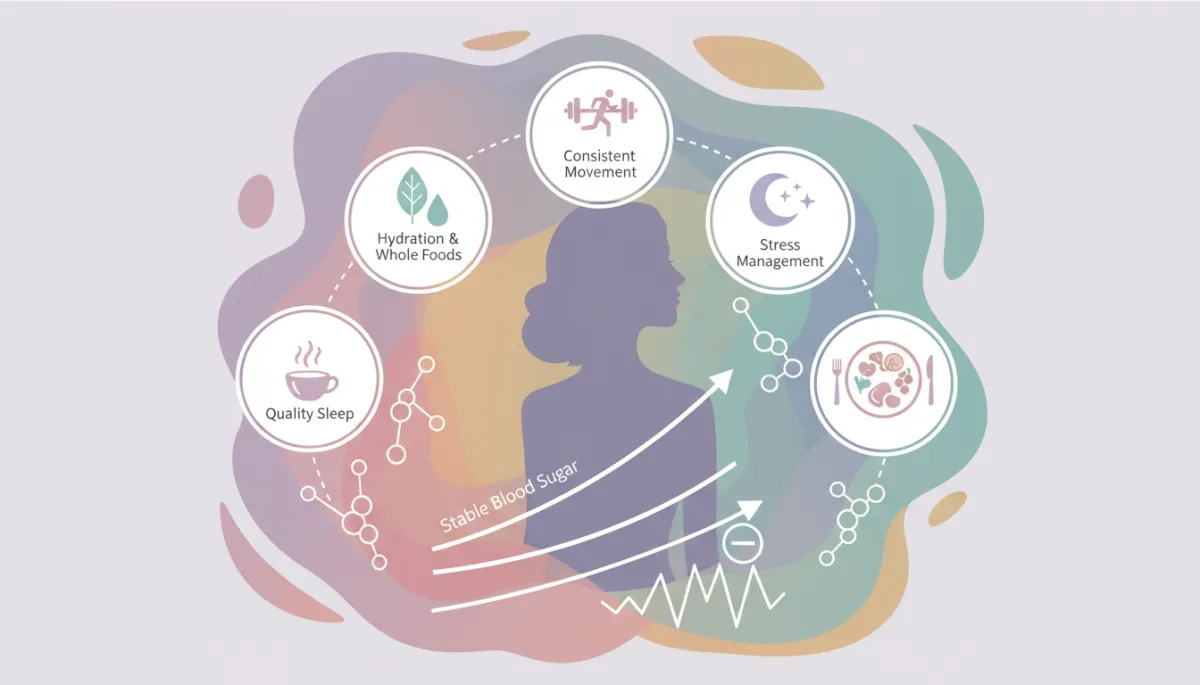
5 Habits to Control Perimenopause Cravings
Perimenopause, Blood Sugar, Cravings
5 Blood Sugar Habits to Tame Perimenopause Cravings and Crashes
Perimenopause can feel like an emotional and physical rollercoaster—especially when sudden sugar cravings and afternoon crashes appear out of nowhere. The good news: simple daily blood sugar habits can soften the ride and help you feel steadier, clearer, and more in control. At Nourish & Ease Wellness, we focus on realistic shifts that fit your actual life, not a perfect one.
1. Start the Day with a Protein-First Breakfast
Grabbing toast, a muffin, or just coffee sets you up for a mid-morning crash. During perimenopause, shifting hormones make your body more sensitive to blood sugar swings, so what you eat first matters even more. Aim for 20–30 grams of protein at breakfast, paired with healthy fats and fiber.
Greek yogurt with berries, chia seeds, and almonds
Veggie omelet cooked in olive oil with a slice of whole-grain toast
Protein smoothie with spinach, nut butter, and unsweetened milk
A protein-first breakfast flattens the sharp blood sugar rise that often leads to 10 a.m. pastry cravings and jittery energy.
2. Use the “Protein + Fiber + Fat” Rule at Every Meal
Instead of counting every gram, think in simple building blocks. At lunch and dinner, build your plate around:
Protein: fish, chicken, tofu, lentils, eggs
Fiber: colorful vegetables, beans, whole grains
Healthy fats: avocado, olive oil, nuts, seeds
This trio slows digestion, helping glucose enter your bloodstream gradually. The result: fewer “I need chocolate right now” moments and more steady focus through your afternoon meetings or school runs.
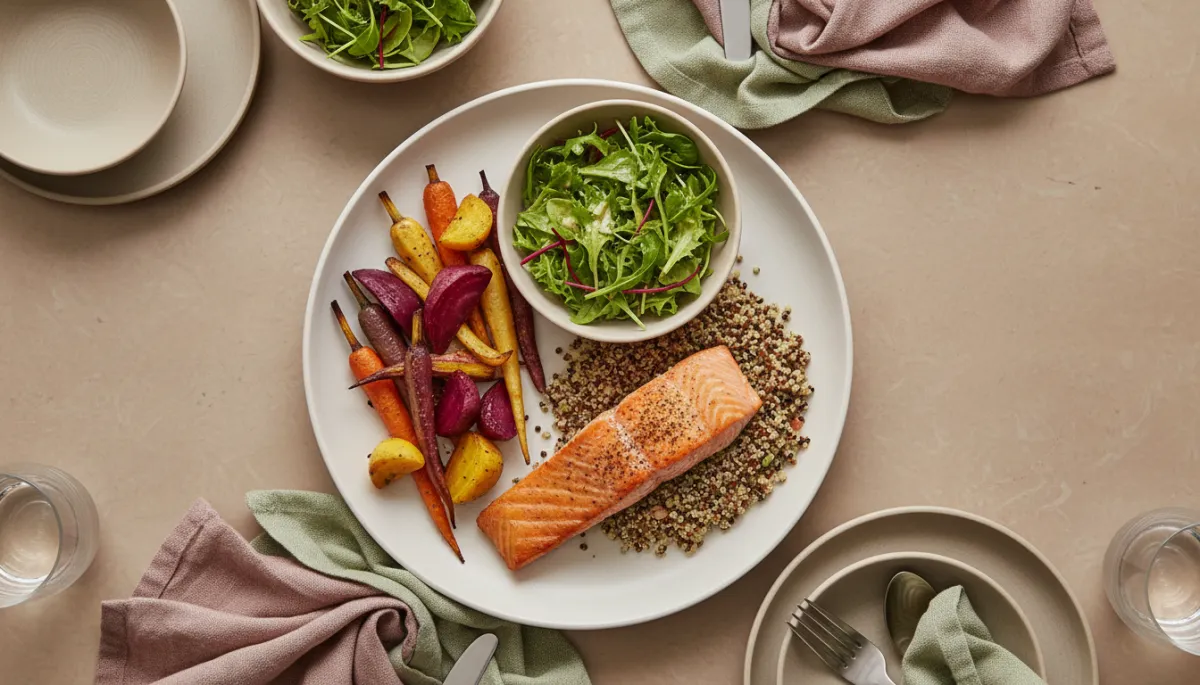
Balanced meals create a slow, steady release of energy instead of sharp spikes.
3. Tame Sugar by Changing the Order of Eating
You don’t have to give up carbs completely to support your hormones. A powerful habit is to change the order in which you eat your food. Start with vegetables, then protein and fat, and eat starches or sweets last. This simple shift can significantly reduce the blood sugar spike from the same exact meal.
For example, at dinner, eat your salad and roasted veggies first, then your chicken or beans, and finish with rice or pasta. You still enjoy your favorite foods, but your body experiences a gentler rise and fall in blood sugar—less crash, less crankiness, and fewer night-time snack attacks.
4. Plan Gentle, Balanced Snacks Before You “Hit the Wall”
Perimenopause often magnifies the afternoon slump. Waiting until you are starving usually leads to grabbing whatever is closest and sweetest. Instead, plan a balanced snack about 3–4 hours after a meal, especially if you notice regular dips in energy or mood.
Apple slices with peanut or almond butter
Hummus with carrot sticks and whole-grain crackers
A small handful of nuts with a few dark chocolate squares
💡 Pro Tip: Pair carbs with protein or fat. A banana alone spikes; a banana with nuts sustains.
5. Support Blood Sugar with Movement and a Calming Evening Routine
Food is only part of the story. Gentle movement—like a 10–15 minute walk after meals—helps muscles soak up glucose, reducing spikes and promoting better sleep. In perimenopause, sleep disruptions can further worsen sugar cravings the next day, creating a frustrating loop.
Combine light movement with a calming evening routine: dimmer lights, a warm shower, a book instead of your phone, and a consistent bedtime. When your nervous system is calmer, your body is less likely to send urgent “I need sugar” signals late at night.
Bringing It All Together
You don’t have to implement all five habits at once. Choose one—maybe a protein-first breakfast or a short walk after dinner—and practice it until it feels natural. Then layer in the next. In our office, we’ve seen that small, sustainable changes to blood sugar habits can ease cravings, stabilize energy, and make perimenopause feel far more manageable and compassionate toward your body. If you’d like support personalizing these habits to your life, schedule a free clarity call with Dr. Valerie Cachola-Wheeler to explore your next gentle step.
