Understanding Metabolism Changes in Perimenopause
Health, Perimenopause, Hormones, Metabolism
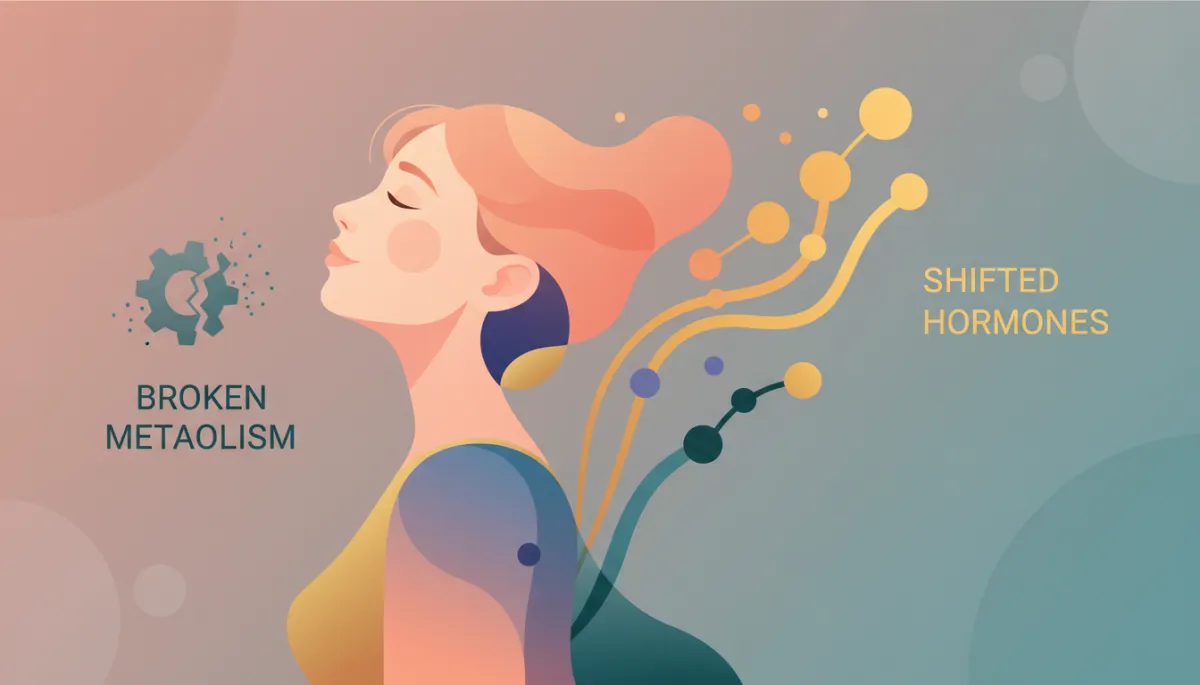
Stop Believing Your Metabolism Broke: Your Hormones Shifted
If you are a perimenopausal woman wondering why your body suddenly feels foreign, you are not alone. Your metabolism is not broken—your hormones are shifting, and your body is asking you to respond differently.
Perimenopause: The Transition No One Prepared You For
Perimenopause is the several-year transition leading up to menopause, when your ovaries gradually produce less estrogen and progesterone. It can start as early as your late 30s or early 40s and last anywhere from a couple of years to a decade. During this time, your cycle may become irregular, your sleep may change, and your mood and energy can feel like a moving target.
Many perimenopausal women also notice a stubborn shift in weight, especially around the midsection, even when their eating and exercise habits have not changed. This is often the moment you think, “My metabolism must be broken.” But that belief is not only inaccurate—it can be discouraging and keep you from making the changes that actually help.
Your Metabolism Is Not Broken—It’s Responding to New Signals
Metabolism is the way your body converts food into energy. It does not suddenly stop working; it adapts to the information it receives. During perimenopause, that information changes because your hormones shift. Think of your metabolism less like a broken engine and more like a smart system recalibrating to new instructions.
When you believe your metabolism is “broken,” it can trigger a cycle of frustration: extreme dieting, over-exercising, or giving up entirely. Instead, recognizing that your body is adapting to hormonal changes allows you to meet it with curiosity and compassion rather than blame.
💡 Reframe: Replace “My metabolism is broken” with “My body is changing, and I can learn what it needs now.”
What Actually Happens When Your Hormones Shift
The phrase “Your hormones shifted” is more than a slogan—it is a biological reality. During perimenopause, several key hormones change in ways that directly influence weight, appetite, and energy:
Estrogen fluctuates and eventually declines, which can promote fat storage around the abdomen and influence how your body uses carbohydrates and fats for fuel.
Progesterone often drops more quickly than estrogen, contributing to fluid retention, sleep disturbances, and mood swings that can affect cravings and motivation to move.
Insulin sensitivity may decline, meaning your body can become less efficient at managing blood sugar, leading to more frequent energy crashes and increased fat storage if meals are high in refined carbohydrates and sugar.
Cortisol, your stress hormone, can become chronically elevated if you are juggling work, family, aging parents, and sleep disruptions. Persistently high cortisol is strongly linked to increased belly fat and feeling “tired but wired.”
None of this means your body is working against you. It means the rules you used in your 20s and 30s—skipping meals, relying on cardio alone, or living on caffeine and willpower—no longer match your physiology.

Understanding hormone shifts helps women choose habits that truly support midlife health.
How to Work With Your Changing Hormones, Not Against Them
Once you accept that your hormones have shifted, you can start making small, targeted changes that support your metabolism instead of fighting it. Here are foundational strategies that respect the realities of perimenopause:
Prioritize protein and fiber. Build meals around lean protein, vegetables, and high-fiber foods to stabilize blood sugar, support muscle, and keep you fuller longer. This directly supports metabolic health in the face of changing insulin sensitivity.
Lift weights, even lightly. Strength training helps preserve and build muscle, which is metabolically active tissue. As estrogen declines, protecting muscle becomes one of the most powerful tools you have to keep your metabolism responsive.
Respect your sleep. Poor sleep disrupts hunger and fullness hormones, making cravings stronger and energy lower. Creating a calming pre-bed routine, limiting late-night screens, and keeping your room cool can make a meaningful difference during perimenopause.
Dial down all-or-nothing thinking. Extreme diets and punishing workouts spike stress and cortisol. Gentle consistency—not perfection—is what helps your body feel safe enough to release stored weight and energy.
📌 Key Takeaway: The same habits that once worked may not work now—not because you lack discipline, but because your hormonal landscape has changed.
Give Your Midlife Body the Credit It Deserves
For perimenopausal women, the story is not “My metabolism broke.” The more accurate, empowering story is: “My hormones shifted, and my body is adapting.” When you see it this way, you can stop blaming yourself and start partnering with your body through food, movement, rest, and stress management that align with this new chapter.
You do not need to chase the body you had at 25 to be healthy, strong, and confident now. By understanding your hormonal shifts and responding with informed, compassionate choices, you can write a new midlife narrative—one where your body is not the enemy, but a wise messenger guiding you toward what it needs next.
💡 Pro Tip: If you’re ready for personalized support in this season, you don’t have to figure it out alone. Click here to schedule a free clarity call so we can map out your next best steps together.
