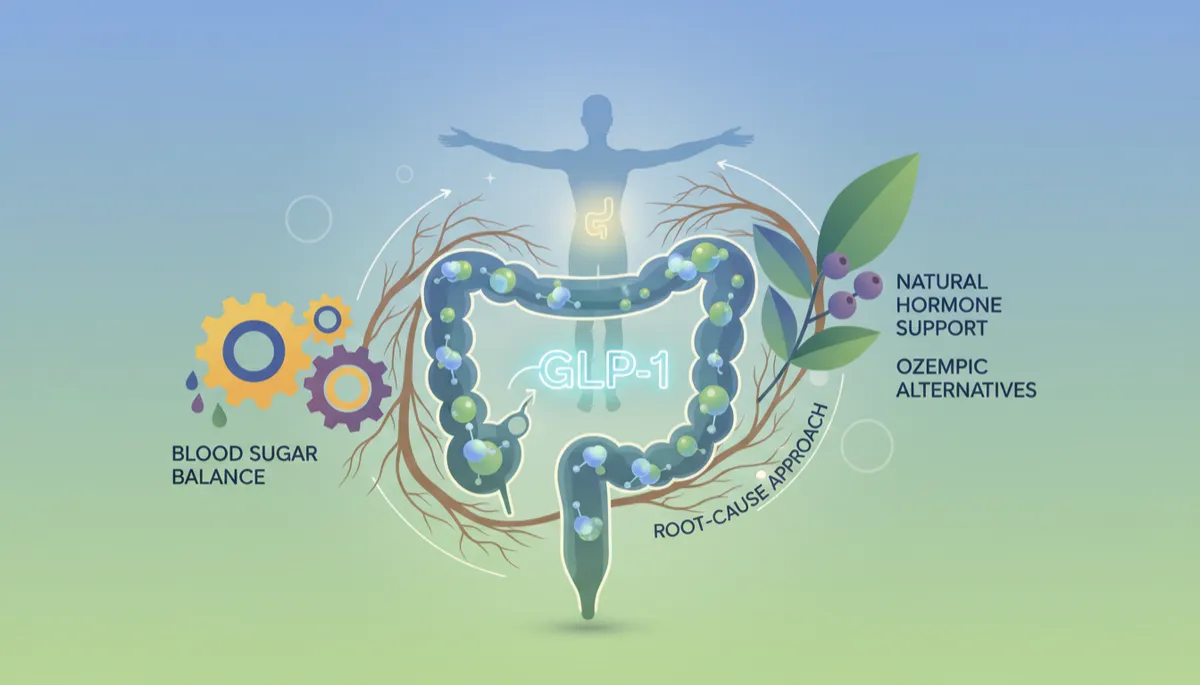
Support GLP-1 Naturally: Alternatives to Ozempic
GLP-1 Hormone, Ozempic Alternatives, Blood Sugar Balance, Natural Hormone Support
Your Body Already Makes GLP-1: How to Naturally Support the Hormone Behind Ozempic
If you’re in perimenopause or menopause and watching the Ozempic headlines, it can feel like the only path to weight loss and blood sugar balance is a prescription. But the story is bigger—and more hopeful—than a single medication. Dr. Valerie Cachola-Wheeler focuses on a root-cause, whole-body approach that honors a powerful truth: your body already makes the GLP-1 hormone that Ozempic is designed to mimic.
GLP-1: The Gut Hormone Behind Satiety and Blood Sugar Balance
GLP-1 (glucagon-like peptide-1) is a gut hormone released after you eat. It helps your body:
Slow stomach emptying so you feel comfortably full instead of ravenous soon after meals
Signal your pancreas to release insulin at the right time for steadier Blood Sugar Balance
Communicate with brain centers that regulate appetite and cravings
The blockbuster medications—Ozempic, Wegovy, and other GLP-1 receptor agonists have shown impressive results for blood sugar and weight in clinical research, and newer drugs continue to emerge. But they do not create a new pathway in your body; they amplify one that already exists in your gut and brain.
The Current Ozempic / GLP-1 Conversation: Missing the Root Cause
Right now, much of the conversation around Ozempic and other GLP-1 drugs focuses on dramatic weight loss numbers and quick results. What’s often missing is a discussion of why GLP-1 signaling became imbalanced in the first place—especially in women navigating hormonal shifts in their 40s, 50s, and beyond.
Research shows GLP-1 interacts with multiple systems: blood sugar, appetite, inflammation, and even reward centers in the brain. If we only “turn up the volume” on GLP-1 with a drug but ignore gut health, stress, sleep, and perimenopausal hormone changes, we risk temporary results and frustrating rebounds when medications are stopped or paused. Many women are also understandably cautious about long-term safety and side effects, and are looking for Ozempic Alternatives that feel more sustainable and aligned with their values.
📌 Key Takeaway: Medications can be powerful tools, but they don’t replace the need to restore your body’s own GLP-1 rhythm and metabolic balance.
Pillar 3 – Balance: A Root-Cause Lens on GLP-1
Dr. Valerie Cachola-Wheeler's H.E.R. Method focuses around several core pillars. Pillar 3: Balance is all about restoring the delicate interplay between blood sugar, hormones, and nervous system regulation—exactly where the GLP-1 hormone lives and works.
For women in perimenopause and menopause, dropping estrogen and progesterone can make insulin resistance, cravings, and stubborn belly weight more pronounced. Instead of chasing symptoms, we ask:
Is your gut microbiome healthy enough to support robust GLP-1 production?
Are your meals structured to naturally trigger satiety and stable blood sugar?
Is chronic stress or poor sleep blunting your hunger and fullness cues?
This root-cause approach doesn’t dismiss medication; it simply ensures that, whether you use a GLP-1 drug or choose non-pharmaceutical Ozempic Alternatives, your internal hormone environment is supported, not ignored.

Personalized plans help align gut, hormones, and lifestyle to support natural GLP-1.
Natural Hormone Support: Everyday Ways to Nurture GLP-1
Evidence suggests that what and how you eat can significantly influence GLP-1 secretion and function. Here are science-informed strategies we often weave into individualized care plans for Natural Hormone Support:
Prioritize fiber at every meal. Non-starchy vegetables, beans, lentils, chia and flax seeds help feed beneficial gut bacteria that, in turn, can enhance GLP-1 release and support Blood Sugar Balance (dietary fiber has been shown to boost GLP-1 secretion in research).
Anchor your plate with protein. Protein from eggs, fish, poultry, or plant sources can stimulate GLP-1 and support satiety, making it easier to avoid late-night grazing and energy crashes.
Include healthy fats for staying power. Avocado, olive oil, nuts, and seeds slow digestion, enhance fullness, and work synergistically with GLP-1’s gut-slowing effect so you feel satisfied longer.
Support your microbiome. Fermented foods like yogurt, kefir, and sauerkraut, along with prebiotic foods such as onions, garlic, and bananas, help cultivate the gut environment where GLP-1 is produced.
Move your body regularly. Gentle strength training, walking, or cycling can improve insulin sensitivity and has been linked to increased GLP-1 levels, amplifying your body’s own Ozempic-like effects without a prescription.
💡 Pro Tip: Aim to build one GLP-1–friendly habit at a time—such as adding a fiber-rich vegetable to lunch—rather than overhauling everything overnight.
Where Do Medications Fit? Rethinking “Ozempic Alternatives”
For some women, GLP-1 medications or other diabetes and weight-management drugs are appropriate and even life-changing. Others may not meet criteria, may experience side effects, or may simply not feel ready to start an injectable medication. In our practice, “Ozempic Alternatives” doesn’t mean a single magic supplement; it means a personalized strategy that might include:
Advanced testing to map blood sugar patterns, insulin response, and gut health
Targeted nutrients that support insulin sensitivity and appetite regulation
Chiropractic and nervous system support to reduce stress load and improve sleep—both critical for hormone balance
The goal is not to be “for” or “against” Ozempic, but to ensure that any choice you make is grounded in understanding your body, your season of life, and the deeper patterns driving your symptoms.
Moving Forward: Partnering with Your Body, Not Fighting It
Your body is not broken—it is communicating. The GLP-1 hormone, your shifting sex hormones, your cravings, and your energy dips are all part of a complex conversation. When we honor Pillar 3 (Balance) and work with your biology instead of against it, Blood Sugar Balance and weight loss become more sustainable and less punishing.
If you’re curious about how your own GLP-1 and metabolic patterns are functioning, we invite you to take the next step. Dr. Valerie Cachola-Wheeler listens deeply, test thoughtfully, and design care around you—not the latest trend.
Ready to explore your options? Schedule a free call or begin the Perimenopause Pattern Analysis to receive personalized insights into your hormones, gut health, and blood sugar. Together, we can support your natural GLP-1 hormone, restore balance, and help you feel at home in your body again.
